


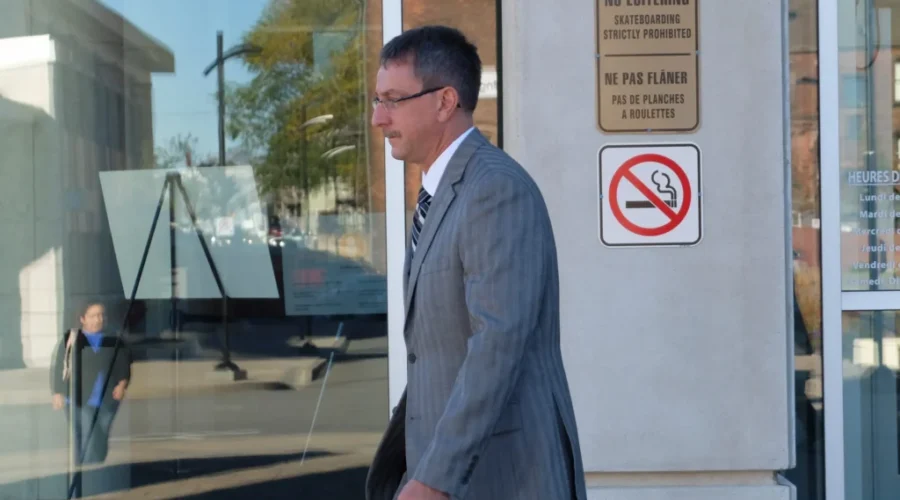
A bloodstain pattern expert testifying at the second-degree murder trial of Dennis Oland that when it comes to analysis, you are limited in your interpretation when you arrive at a crime scene after the body has been removed — which was the situation he found himself in with the Richard Oland case.
Sergeant Brian Wentzell of the RCMP testifying the best opportunity is the body is still present and things are undisturbed.
Wentzell was told by his supervisor on July 10, 2011 that the Saint John police were looking for their help in doing bloodstain pattern analysis at the crime scene. He arrived in Saint John the next day. The trial has heard that Richard Oland’s body was removed from his investment firm, Far End Corporation in uptown Saint John, on July 7.
Wentzell telling the trial that he remembers saying that he did not see any obvious area where someone had left the scene.
Wentzell going through a PowerPoint presentation called BloodStain Pattern Analysis. He says there are three categories of bloodstains: passive, spatter and transfer. He testifies that the main pool of blood at the crime scene was 85cm by 100cm in size. Wentzell going into detail about the bloodstains found at the crime scene during his testimony.
This on day 18 of the murder trial of Richard Oland’s son, Dennis Oland. 65 days have been set aside.
It’s expected he will be back on the stand when the trial resumes at 9:30am on Friday.
Our reporter Laura Lyall is covering the trial and is live-tweeting the proceedings from the courtroom. You can follow along by going to her Twitter page, the CHSJ News Twitter page or the Wave News Twitter page.