


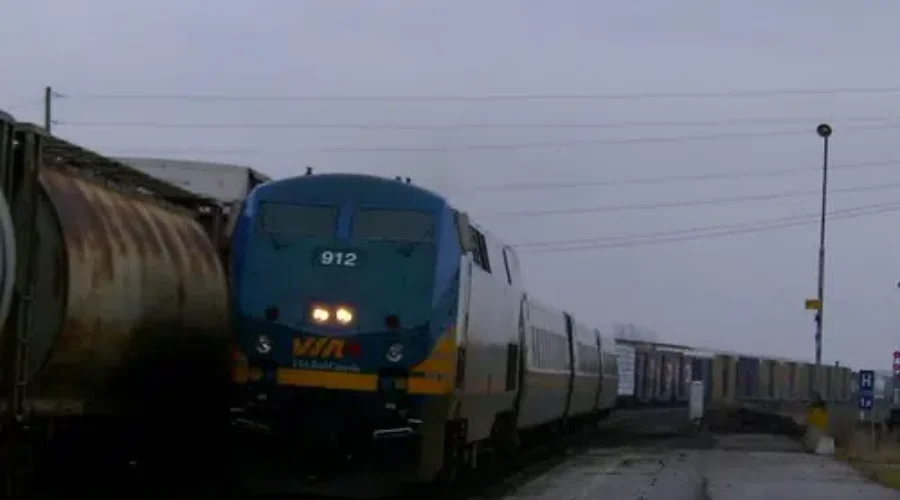
Rail service in Eastern Canada has screeched to a halt as First Nations demonstrators refuse to dismantle blockades that are keeping many of the country’s trains from moving.
CN Rail announced Thursday evening it was stopping all of its trans-continental trains in Eastern Canada. Meanwhile, Via Rail has shut down its passenger service across most of the country.
In a statement, CN said it has begun a “disciplined and progressive shutdown” of its Eastern Canadian operation, as demonstrators in Ontario continue to ignore a court order demanding they leave.
The blockade is maintained largely by members of the Tyendinaga Mohawk community, near Belleville, Ont. It’s part of a nationwide protest in solidarity with Wet’suwet’en hereditary chiefs who have been demonstrating against the Coastal GasLink natural gas pipeline in British Columbia.
JJ Ruest, the president and chief executive officer at CN, said in a statement last night that shutting down trains is the safest option since court orders in Ontario aren’t being enforced.
“With over 400 trains cancelled during the last week and new protests that emerged at strategic locations on our mainline, we have decided that a progressive shutdown of our Eastern Canadian operations is the responsible approach to take for the safety of our employees and the protesters,” he said.
“This situation is regrettable for its impact on the economy and on our railroaders as these protests are unrelated to CN’s activities, and beyond our control.”
Propane shortage looms in wake of shutdown
Ian Wilson, the president of Halifax’s Wilson Fuels, says the rail shutdown could very quickly lead to propane shortages in the region.
He said most of the propane coming into the Maritimes arrives by rail. His company receives about three railcar shipments a week, but “now we’re at zero”
“We certainly depend on a reliable rail network to make propane deliveries, and when they stop in the middle of winter, when demand is at its highest, it’s a problem,” he said.
He said most companies plan to deal with brief, unexpected disruptions to rail service, but that any extended stoppage will be a big problem.
Without new shipments, he said, his company can cushion the blow for a while by adjusting the amount of propane they put into people’s tanks and eventually prioritizing certain customers.
He also said a small amount of propane can be shipped into the region by truck, but that that will only ever be “a fraction” of what is needed.
He said he is “befuddled, frustrated, and angry” with the demonstrators for potentially putting people in danger during the cold Canadian winter.
“Sometimes people think this is a worthwhile endeavor, it’s a protest, and if causes people some inconvenience well then that’s the price to bring attention to this matter,” he said. “But this is not an inconvenience. It’s public safety. In the Canadian winter, this isn’t being uncomfortable, this is freezing.”
CNs stoppage could also have significant economic consequences for other industries in Halifax.
According to Lane Farguson of the Halifax Port Authority, 60 percent of the cargo that comes into the port is loaded onto trains.
Farguson told Huddle Friday morning that “at this early stage, we continue to work with CN Rail and our terminal operators to minimize the impact on Port of Halifax operations.”
VIA Rail Canada has also halted most of its passenger trains due to protests.
A statement from the company says, “Following a notice from the infrastructure owner, CN Rail, that they are no longer in a position to fulfill their obligations under the Train Service Agreement between VIA Rail and CN Rail, VIA Rail has no other option but to cancel most of its services on the network, until further notice.”
VIA Rail is in the process of issuing refunds to its passengers.