

THE MISSION
Second Chance Workshop’s mission is to offer a pre-employment program and provide employment opportunities to the most disadvantaged in our communities, while paying particular attention to the importance of reducing harmful pollutants in the atmosphere.
Recycled Items/CO₂ Emissions Avoided
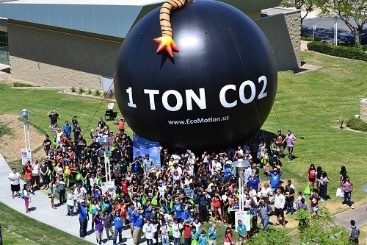
Enviro Plus/Second Chance Workshop, in 2025, diverted 263,854 pounds worth of items from landfill or the production of new goods. This action prevented the emission of 348.95 tonnes of CO₂.
The estimate of greenhouse gas (GHG) emissions avoided was calculated for all items recycled by Enviro Plus. The objective is to estimate the amount of carbon dioxide (CO₂) that would have been emitted if the processed items had been manufactured from virgin raw materials.
The calculation of avoided emissions is based on the following formula:
CO₂ avoided (kg) = Total weight (kg) × Emission factor (kg CO₂/kg).
This formula was chosen because the inventory of the weight of recycled items does not consider the manufacturing materials. Therefore, average emission factors per product category, derived from the ADEME’s Carbon Base® methodology, were applied to obtain a consistent estimate.
It is important to note that the impacts related to transportation and internal energy consumption are not considered. The result therefore corresponds only to the avoided emissions related to the manufacture of new products. However, the associated emission factors are underestimated and vary between 1.1 and 4 kg of CO₂ per kilogram of product, depending on the nature of the materials and their carbon intensity.
Recycled items whose use reduces greenhouse gas emissions include furniture (tables, chairs, beds, sofas), household appliances (washers, dryers, stoves), mattresses (king, queen, and single sizes), books, and tableware (plates, glasses, pots and pans).
Reuse of these items is therefore a key lever in the transition to a more sustainable economy and is part of a process of material recovery, extending their lifespan and limiting the use of virgin resources. Reuse thus contributes to reducing the environmental impacts linked to waste production and management, as well as landfilling, which can contaminate soils.
Ultimately, this circular economy approach illustrates Enviro Plus/Second Chance Workshop’s contribution to the transition to a lower-carbon economy. By avoiding the production of new goods, these actions constitute an effective lever for reducing greenhouse gas emissions and confirm their relevance within an ecological transition framework.
Manoucheka Nelson Revolus
Master’s candidate in Environmental Studies at the Université de Moncton, graduate in Agronomic Sciences/specializing in Natural Resources and Environment from the State University of Haiti. Environmental training provided by the Francophone Institute for Sustainable Development and Senghor University. Leadership and communication skills developed through Toastmasters International and the Frank McKenna Leadership Center – Alumni.