


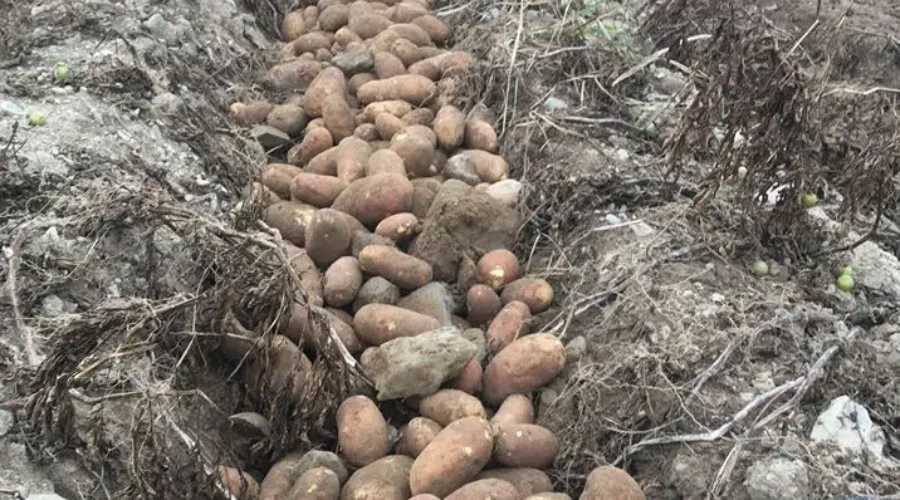
Millions of pounds of processing potatoes have been diverted, and donated in the province, so they won’t go to waste.
Executive Director for Potatoes New Brunswick Matt Hemphill says when businesses closed in March due to COVID-19, they began feeling the effects.
They had grown and stored enough potatoes, to meet anticipated demands. Once the pandemic hit, the product wasn’t needed anymore.
He says they’re now seeking help from the federal government in the surplus buy back program, “If the feds can make potatoes part of this buy back program, we can remain sustainable. We are coming off a bad year last year, that we saw no financial support for. So to have back to back bad years, it puts us in a bad financial position.”
At one point, they had around 250 million excess pounds of potatoes.
Hemphill says, “We have lost millions and millions of dollars, by not only donating, but by giving them cattle, putting them into digesters to convert them into energy, and the food banks are full as you can imagine. They are not designed to receive a tractor trailer load of potatoes. It is usually just a pallet here, and a pallet there, so we have all of the food banks full, and that is putting pressure on our other sector, which is the retail sector.”
With help from the federal government, Hemphill says in a perfect world, processors would be able to find more cold storage. But in New Brunswick, it’s not that easy.
He says they are running out of time.
“Potatoes are a perishable product. Some are refrigerated and some are not. We are moving in to the warmer season, so we’re running out of time. We needs some answers from the feds now.”
Hemphill adds, “The processors here in New Brunswick have cut our production volume by 15 per cent. If we don’t get help, we are already down revenue next year regardless of what happens, and that is all due to COVID-19. There’s going to be a bit of a hangover as the restaurants slowly open up back up and get back to normal. The experts are telling us 12 to 14 months to recover.”