

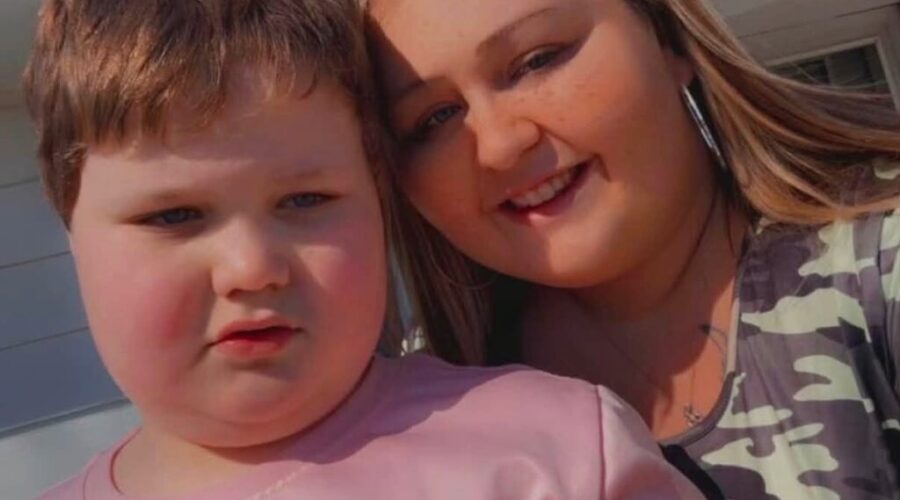
A Fredericton mom has found a permanent way to ensure her non-verbal autistic son can always communicate.
Now she is helping other non-verbal people do the same.
Almost three months ago, Jessica Fletcher got a QWERTY keyboard tattoo to help communicate with her son, Hunter, who previously relied solely on an Augmentative and Alternative Communication (AAC) device — a tablet that allows users to select words and symbols — to express himself.
The idea came one day when Fletcher and Hunter were dining at a restaurant, and his tablet ran out of battery.
Fletcher said that when the device died, she asked a waitress for a piece of paper to write the alphabet for Hunter, so he could tell her what he wanted to order.
She said that when Hunter saw the paper, he became frustrated, turned it over, and began writing out the keyboard layout instead.
Fletcher said that was the moment she realized she couldn’t limit his ability to communicate to technology, because it could fail.
“So, I thought what better way than a tattoo, something that’s always on me. It’s not something I could forget at home,” she explained.
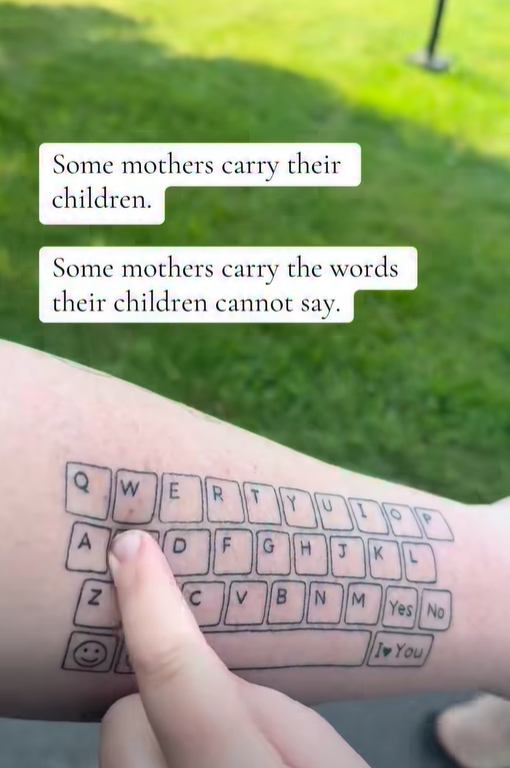
Fletcher then worked with local tattoo shop Main Street Tattoo Company to design the tattoo, complete with letters, a happy face, a sad face, and an I “heart” you button.
Fletcher said that when she revealed the tattoo to Hunter, he immediately became interested.
He then grabbed her arm and typed “mama.”
Since then, Fletcher said Hunter uses the tattoo every day, especially when they go swimming and in other spaces where technology can’t be used.
The tattoo has also provided another unexpected perk for Hunter: privacy.
Unlike Hunter’s speech device, which speaks his words aloud, the tattoo lets them share quiet conversations.
Fletcher said Hunter has used the tattoo when they go to the movie theater or when he needs to go to the bathroom.
She said it made her sad that she never thought of a way for him to communicate privately before.
“Communication is a human right; he deserves to be able to talk to me privately, or loudly, any way he wants,” she said. “It’s kind of bittersweet for sure; I’m so happy and amazed he can talk to me privately, but again it makes me sad he went 11 years without the ability to do so.”
Fletcher first shared her and Hunter’s story in a social media video that went viral, racking up more than two million likes and 115 million views.
Fletcher said that since then, their story has inspired many loved ones of autistic non-speaking people to find better ways to accommodate them.
“A lot of people told me that they wish they were brave enough to get a tattoo so they could accommodate non-speakers in their life, and I thought why not make shirts, sweaters, hoodies with a keyboard on the sleeve, something removable so no one has to commit to having something so permanent,” Fletcher said.
Fletcher partnered with Maritimer Clothing, a local New Brunswick business, to create T-shirts and hoodies with the keyboard design.
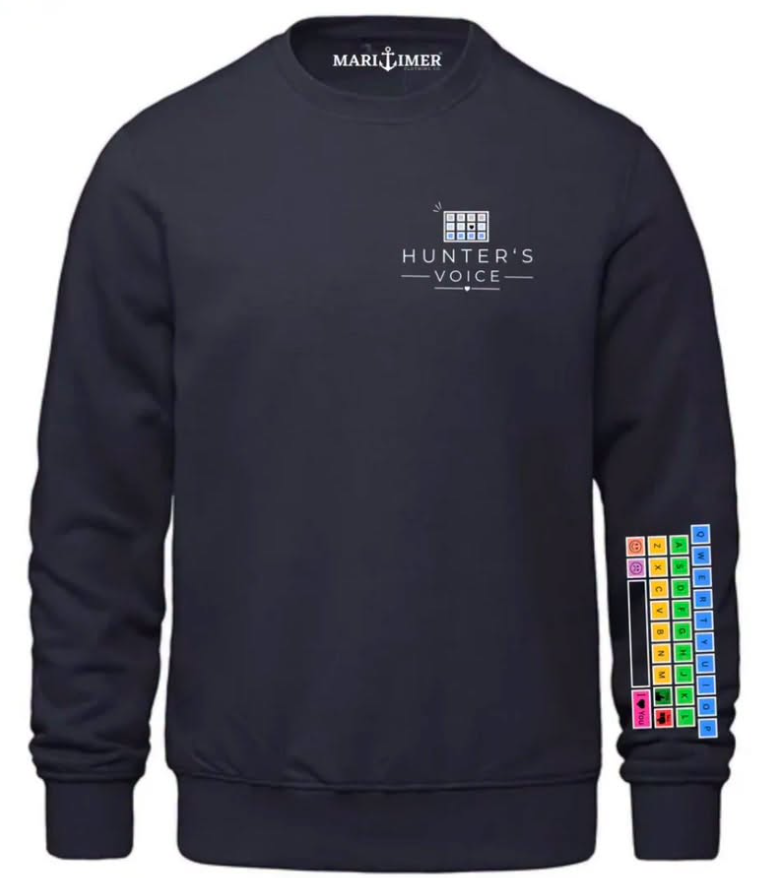
She said so far sales have been good, and that the initiative has also been adopted by teachers, nurses, and paramedics looking to better communicate with non-speaking individuals they interact with.
“It’s been really cool to see the impacts it’s making because it’s accessible communication right within reach,” she said.
She is now working on creating sleeves with the keyboard for people living in hotter climates, shirts and sleeves with AAC symbols for children who still don’t know how to write, and has also partnered with a U.K. company to sell the items there.
Fletcher hopes one day she can make them available globally.
“It’s important to get these out there, and it opens the door for deeper conversations about communication barriers,” she said.
Fletcher also hopes her and Hunter’s story continues to create change and more opportunities for non-speaking people to communicate.
“Non-speaking does not mean non-thinking, and communication doesn’t always have to stay on speech to be real and be meaningful, so I think offering as many accessibility tools for non-speakers is crucial,” she said.