

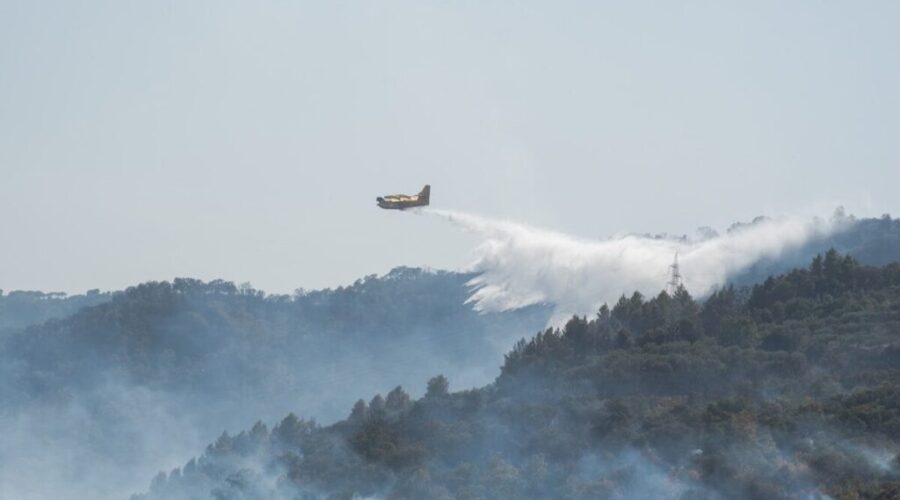
Federal officials say wildfire danger is rising across Canada as hot, dry weather settles in for July and August.
Emergency Management Minister Eleanor Olszewski delivered the update on Thursday.
Joining her were Corey Hogan, parliamentary secretary to the minister of energy and natural resources, and Ginette Lavack, parliamentary secretary to the minister of Indigenous services.
Olszewski said there are 796 active wildfires across the country, including 60 that are out of control.
She said 3,137 fires have burned 1.4 million hectares so far this season.
At this point last year, Canada had fewer fires but a larger burned area of more than 4.6 million hectares.
Weather outlook and fire danger trends
Environment and Climate Change Canada’s forecast shows above‑average temperatures through August, with dry conditions expected in parts of Manitoba and northwestern Ontario.
Federal modelling indicates July fire danger will be highest in the Northwest Territories, Nunavut, northern Manitoba and areas around Hudson Bay, with elevated risk in northern Ontario and Quebec.
Western Canada is expected to see mostly low to moderate danger due to recent widespread rain, though interior British Columbia may face pockets of higher danger.
August is expected to follow similar patterns, with southern interior B.C. facing higher‑than‑normal danger.
Preparedness funding and Indigenous‑led projects
Natural Resources Canada announced $1.25 million for six projects aimed at strengthening wildfire preparedness and response.
The funding supports work with Metis Nation British Columbia, Metis Nation of Alberta, Metis Nation-Saskatchewan, and the Metis Nation of Ontario on risk mapping, emergency planning, evacuation coordination, and the integration of Indigenous knowledge into wildfire management.
Additional funding will support the Deline Got’ine Government and Chipewyan Prairie First Nation to train up to 38 Indigenous wildland firefighters.
The federal government says it continues to work with provinces, territories and First Nations communities as emergencies unfold.
Olszewski also approved Manitoba’s Request for Federal Assistance on July 3 to support the flooding response in the Parkland Region following intense storms and rainfall.
Ottawa highlighted that it is prepared to support Manitoba if the province requests access to the Disaster Financial Assistance Arrangements.
“With the summer in full swing, we are seeing increased wildfire danger across the country,” Olszewski said in a statement.
She added that the federal government is committed to working with provinces and territories throughout the season.
Environment Minister Julie Dabrusin said climate change is contributing to more severe weather events.
“By strengthening our ability to monitor, forecast, and communicate environmental hazards, we are helping communities across Canada adapt to a changing climate, improve resilience, and stay safe,” Dabrusin said.
Indigenous Services Minister Mandy Gull‑Masty said First Nations leaders and responders have shown strong leadership during evacuations.
Lavack stated First Nations communities continue to face the greatest impacts of climate change.
Hogan explained that investing in local preparedness is essential as fire activity increases.
Federal officials say Canadians can stay informed through national wildfire and weather alert systems and to learn more about emergency preparedness.