

Tri-County Ground Search and Rescue was formed in November 1987 and has been operated on volunteer time since. The team is now approaching their 40th year in service.
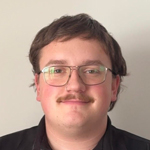
Nick Kennedy, Vice President of External Affairs, has been with TCGSAR for four years.
Kennedy says the team started by looking for people predominantly in the wilderness or remote locations. Over the years of TCGSAR’s development, the team has done everything from evidence searches with the RCMP and local law enforcement to covering both national parks and the three counties in their area: Albert, Kent, and Westmoreland counties.
“We’ve expanded exponentially from some concerned citizens to a professional service of volunteers,” said Kennedy.
TCGSAR is 100% volunteer operated, so it can be activated by the agency having jurisdiction, which is typically an RCMP detachment. However, any agency can activate Tri-County, such as various police forces, Emergency Measures Organization (EMO), National Parks, or any of the other nine ground search and rescue teams, for a request for mutual aid services. TCGSAR also provides additional aid to civil power capabilities, such as mapping and door-to-door wellness checks during evacuation notices for wildfires.
Volunteers train three times a month, according to Kennedy.
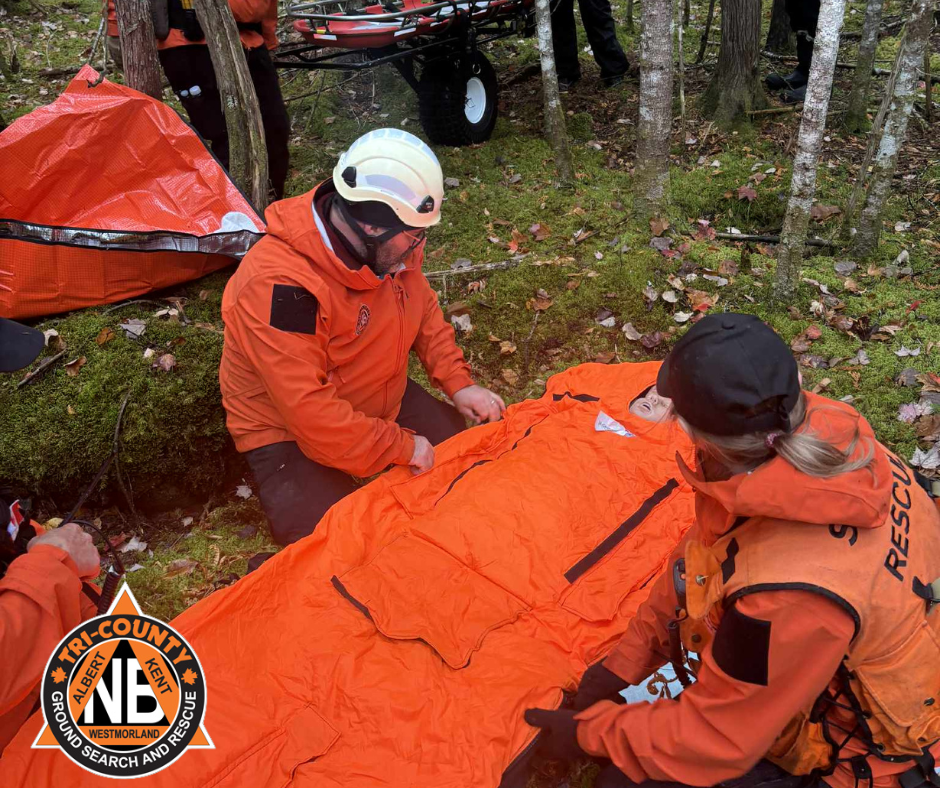
“We train twice a month on evenings as well as one day long during the third Saturday of each month. We will come together and either do a mock search for a missing subject profile, map and compass, or various training, be it extrication, medical skills, or radio communications. We are on call 24/7/365, but there are also core skills and standards that we hit on a yearly basis to ensure that our members are ready to respond at a moment’s notice.”
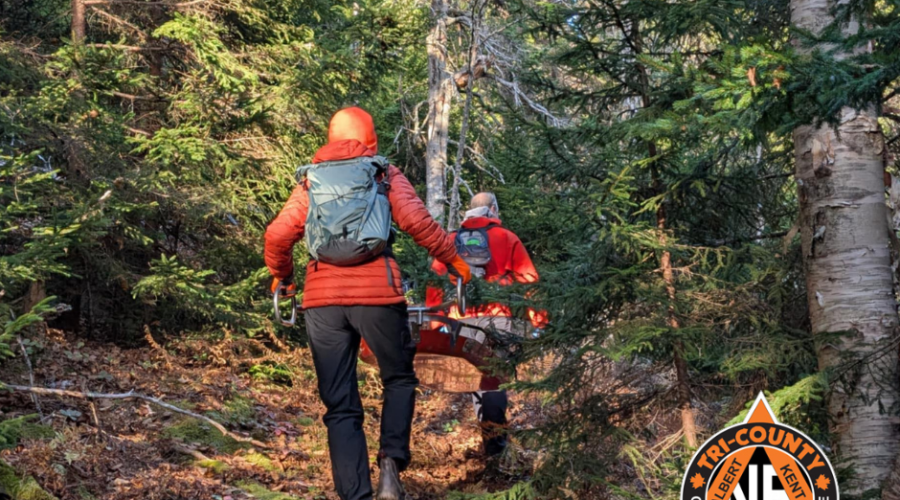
One incident the team was involved in recently was in Upham, N.B., last winter, where they had an individual go missing in the woods for nearly 14 hours. With the assistance of K-9 police services and TCGSAR members serving as flankers, they were able to locate the individual and provide immediate medical assistance.
“We extricated the individual and did a proper handoff to Ambulance New Brunswick paramedics, resulting in an extremely positive outcome in a situation that otherwise might not have been,” said the executive director.
This was one of 36 activations for the group in 2025. The team did 66 percent of these activations in their coverage area, and the rest were aid to civil power or assisting another GSAR team.
“It’s no secret that we’re an aging population in NB, so we are seeing a lot more of Alzheimer’s or dementia wandering type calls where family would be concerned about wandering away from a residence. We are also seeing an uptick in despondence. Mental health is also not trending in the best of directions, so we could be activated for that, as well as missing children,” explained Kennedy.
TCGSAR sent members to Nova Scotia to assist in the missing Sullivan children case.
“When receiving a call-in, one of our search managers will get together with the incident commander from the RCMP and say, ‘Hey, this is how we best feel we can make a difference. Is this the right fit for us? How many other teams do we want to activate?’ and then we make an activation plan.”
There has been one activation this year thus far where the subject was located shortly after, with the assistance of the RCMP, but TCGSAR never made it on the ground.
“We set up a meeting point, usually close to the point last seen, and ideally headed towards the direction of last known travel. Taskings will get created using some scientific methods – namely Robert Koester’s Lost Person Behaviour Reference Book – and from there, teams will deploy, predominantly looking for clues.”
“People think it’s like in the movies, where we make an extended line and walk forward until we find them, but that’s not the case. Often times we are looking for articles of clothing, other clues such as a smoked cigarette or an empty water bottle that someone might have left behind, so on and so forth. These all help us gather information and more precisely target where we think a person might be lost.”
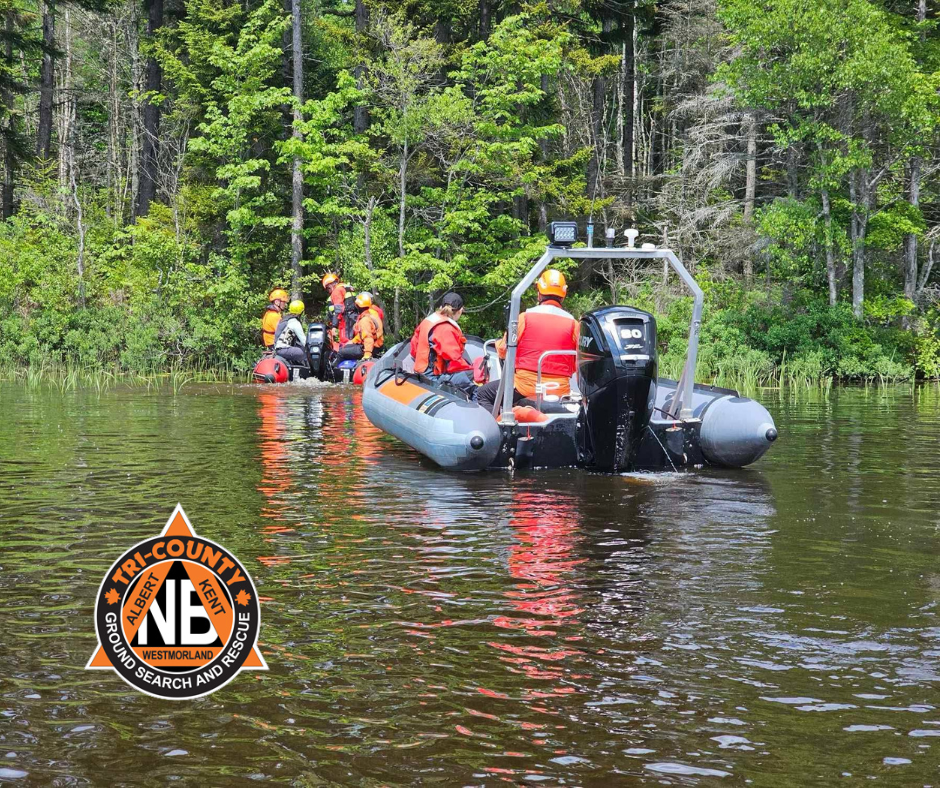
The budget for TCGSAR is funded by EMO through the Government of New Brunswick. The New Brunswick Ground Search and Rescue Association (NBGSARA) receives the funding and distributes amounts to all 9 teams in the province. TCGSAR receives anywhere from $3,000 to $11,000.
Just to keep two vehicles and a trailer running, Tri-County’s operating budget can exceed $25,000 a year.
“If our members aren’t out actively volunteering, being reimbursed for mileage by the RCMP, who we have a great relationship with, obviously, we’re going to come up short in that. So, we have multiple fundraisers a year and a lot of members who donate their mileage checks back to the team to ensure that we’re able to keep running.”
Tri-County’s budget goes towards vehicle maintenance, gear upkeep, training, and insurance.
“Tires expire, trailers require replacement, and GPSs require upgrades. Recently, we acquired, through a very generous donation, a $16,000 thermal drone. Just being able to keep that insured and our members qualified costs a lot of money,” said Kennedy.
TCGSAR’s end-state goal is to get a home for their equipment. Unlike volunteer or paid fire departments, which people predominantly think of as having a primary station, Tri-County does not.
Their equipment, regardless of conditions, is in the elements constantly. TCGSAR has a compound where they can park and lock their vehicles and trailers, but their response times are delayed because they have to gather their equipment from several locations.
For example, they keep a majority of their equipment locked up in an office that is generously donated by the Air Force Vets club.
“The end state goal would be all equipment in a heated building, able to respond at a moment’s notice, without delay,” said the vice president, “we can handle the recruiting, we can handle the training, but right now, we need a place to store our vehicles and call home.”
One misconception that Kennedy sees at TCGSAR is that a lot of people think they must wait a certain amount of time before reporting someone missing.
“That is simply not the case. You can report someone missing to your local law enforcement at any time, and then, depending on the scenario, they will reach out to us, and we might make the decision to activate. You do not contact us directly; you contact your local law enforcement, and they will get the ball rolling as soon as possible to activate us.”
For more information about Tri-County Ground Search and Rescue, visit their website.